Downloads

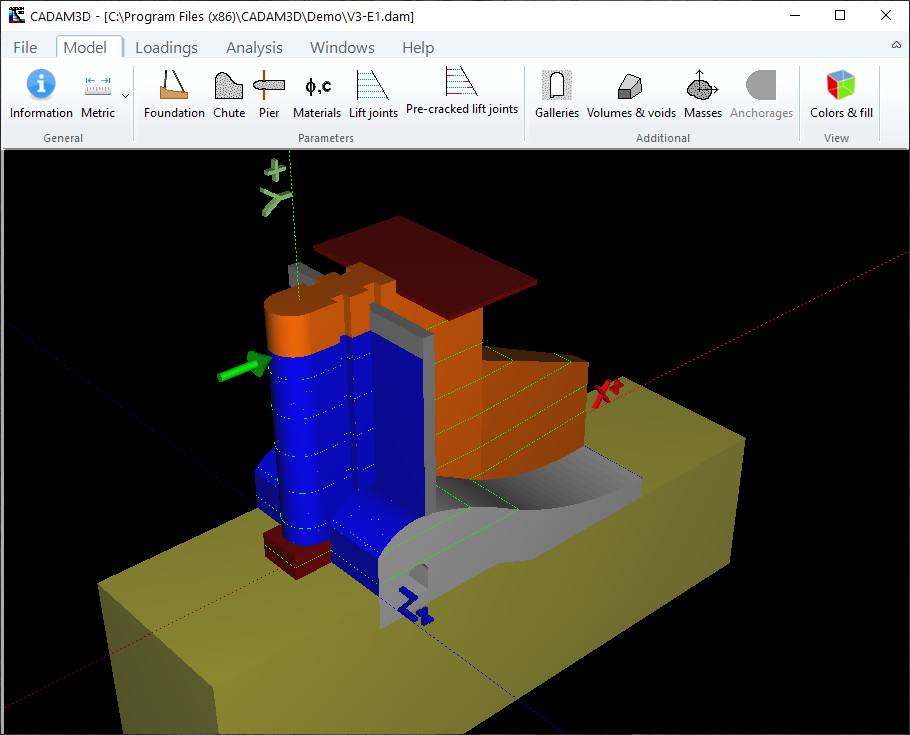
CADAM3D is a user-friendly software based on the gravity method originally developed for one of the world biggest concrete dam owner, Hydro-Quebec, and for Dams and Hydrology of the Quebec Ministry of Environment (Quebec's legislator for dam safety). CADAM3D is fully functional and is intensively used by Hydro-Quebec since 2005. To our knowledge, no other software similar to CADAM3D is available at this time.
If you perform stability analyzes of concrete hydraulic structures, this software will allow you to perform them much faster and more efficiently. If you are interested in this type of software and would like to try CADAM3D for free, please click on the button "Contact us for a free trial of CADAM3D" to send us a message.
Home security camera systems involve a complex trade-off between providing safety and maintaining the privacy of residents and neighbors. While modern cameras offer advanced monitoring, they often require users to trust third-party cloud providers with sensitive video data. Privacy Challenges in Modern Systems
However, the increasing use of home security camera systems also raises important privacy concerns, including: Home security camera systems involve a complex trade-off
Over the following weeks, Lena made changes. She moved the living room camera to the front porch—where it could see the door, but not the sofa. She turned off the indoor recording schedule while she was home. She disabled the “facial recognition” feature that had tagged Mr. Halpern as “familiar person—neighbor.” She moved the living room camera to the
When you install a cloud-connected camera, you are essentially placing a digital broadcast station in your living room. The data doesn’t just sit on a hard drive in your closet; it travels through your Wi-Fi router, across your Internet Service Provider’s (ISP) cables, and onto a third-party server—often owned by Amazon (Ring), Google (Nest), or a myriad of other IoT manufacturers. Halpern as “familiar person—neighbor
To maximize security while respecting privacy, follow these installation and configuration steps: Do Home Security Cameras Violate Privacy? A Debate
: Cameras should never be placed in bathrooms, bedrooms, or guest rooms.
Legal liability often depends on camera placement (private vs. semi-public vs. public space) and audio recording (which triggers wiretapping/eavesdropping laws in many regions).
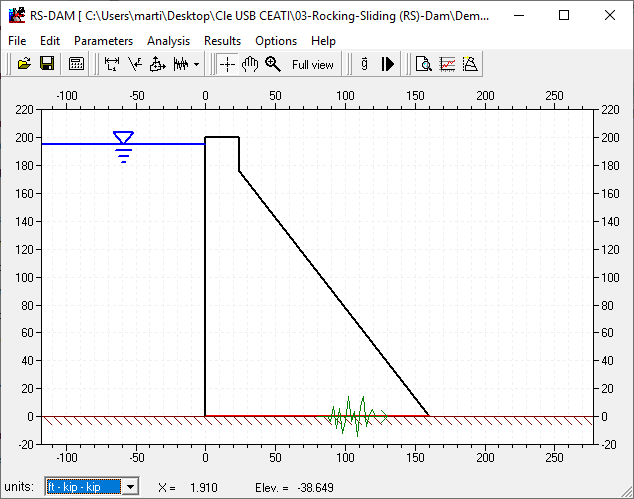
RS-DAM is a computer program that was primarily designed to provide a computational tool to evaluate the transient response of a completely cracked concrete dam section subjected to seismic loads. RS-DAM is also used to support research and development on structural behavior and safety of concrete dams.
RS-DAM is based on rigid body dynamic equilibrium. It performs a transient rocking and/or sliding analysis of a cracked dam section subjected to either base accelerations or time varying forces. Several modelling options have been included to allow users to explore the influence of parameters (e.g. geometry, additional masses, variation of the uplift force upon rotation, hydrodynamic pressures in translation (Westergaard) and rotation, center of rotation moving with sliding, coefficient of restitution of impact, etc...). RS-DAM is developed in a university context and has no commercial aspect.
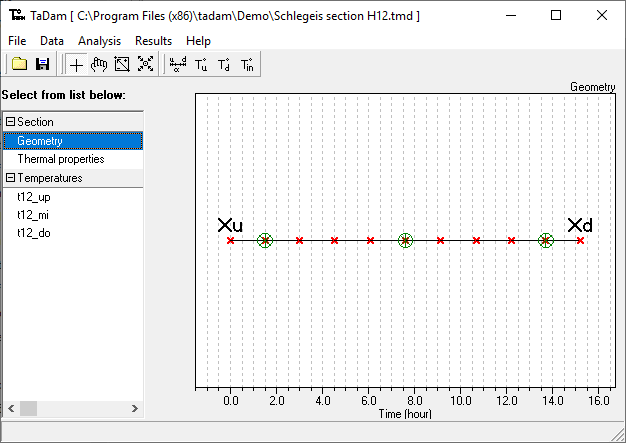
TADAM (Thermal Analysis of concrete DAMs) software employs a new frequency-domain solution technique to solve the 1D thermal transfer problem, allowing the calculation of temperature histories in a concrete dam section.
The direct solution calculates the evolution of the temperature distributions from the temperature histories of the upstream and downstream faces. The inverse solution uses temperature histories, measured inside the section, in order to calculate the temperature fields at the external faces, while taking into account the thermal wave attenuation effects and the phase angles along the section.
TADAM is developed in a university context and has no commercial aspect.